Sounds Amazing In Your Headphones.
Falls Apart In The Car.
Learn the Translation Pass — in the DAW you already own, make your mix hold up in the car, earbuds, kitchen speaker, and your friend's awful phone.
No new gear. No treated room.
Right Now, Only $27:
Yes - Make My Mix TranslateInstant digital access • Backed by a 365-day, no-questions refund
Hey Friend —
Does this sound familiar?
It's 12:40am. You just finished the mix. In your headphones it sounds huge — full low end, vocal sitting perfect, that one transition hitting just right. You lean back. You allow yourself the nod. This is the one.
You bounce it out...
Mix_V12.8_finalV3_FINAL_THISONE.wav
...and go to bed actually excited.
Next morning, you play it in the car.
The low end? Gone. The vocal you placed so carefully? Buried alive. The whole thing sounds thin and boxy and weirdly muddy at the same time, which shouldn't even be possible, but here we are.
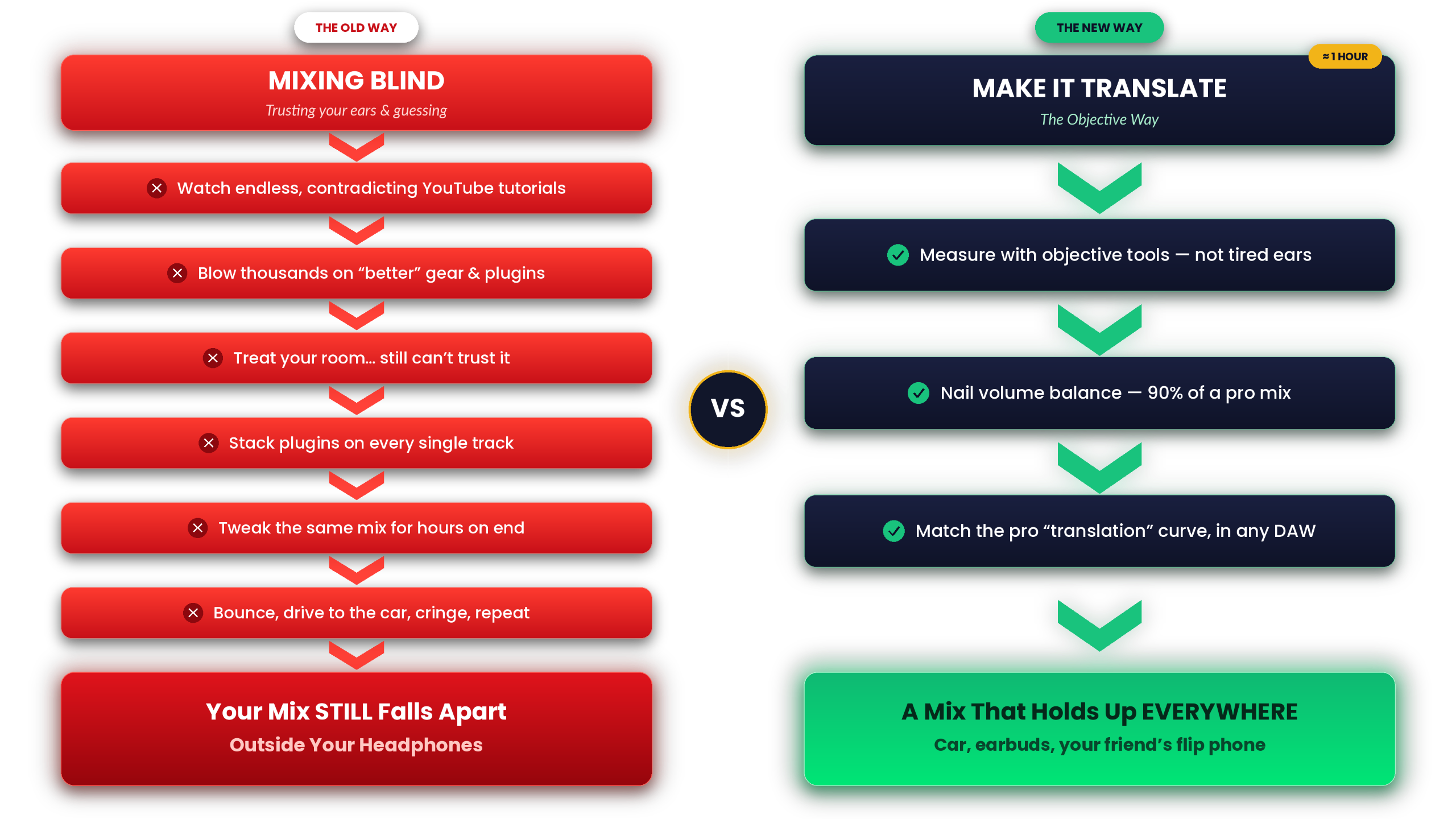
So you do the ritual. You know the ritual:
-
Tweak. Bounce. Walk to the car. Listen. Wince. Walk back.
-
Tweak. Bounce. Walk to the car. (Your step counter thinks you've taken up power walking.)
-
Crank the bass because the car ate it — now it's boomy everywhere else.
-
Watch one more YouTube video that spends 27 minutes saying nothing and contradicting the last one.
-
Open the song the next day and quietly wonder if you ever actually liked it.
The moment you finally finish a track, you go to send it to the group chat… and then you don't. You've typed the message. The file is attached.
And you just… close the app. Because you already know how it sounds on their phones.
Meanwhile your cupholder has heard more versions of this song than any human being ever will.
If any of this sounds familiar — good.
This is for you.
The Real Reason Your Mix Doesn't Translate:
Here's the truth that 400 tutorials never got around to telling you:
It's not your gear. It's not your room. It's not your ears being "bad."
Your ears are wonderful, professional liars.
The longer you listen to your own mix, the more your brain "gets used to it" — flaws and all — until you genuinely cannot hear what's wrong anymore.
That's not a talent problem. That's biology.
It happens to engineers with rooms that cost more than your car... or 100x your car.
So when your mix falls apart, it's not because you needed the $1,500 monitors. (Put the credit card down... I'm serious. We're saving you $1,473 today.)
It's because you had
No objective way to know if your mix was balanced in the first place.
You were eyeballing it, except with your earballs, which is somehow worse.
Like shooting from the hip in a bad western film...
Instant digital access • Backed by a 365-day, no-questions refund
Pro engineers figured this out a long time ago. They don't just "use their ears" and hope.
They check their mix against objective measuring sticks — references, objective samples, a few dead-simple checks — so the mix is provably right before it ever leaves the room.
Their car test is a victory lap.
Yours is a coin flip.
And the single biggest lever? Volume balance. Plain old "how loud is each thing", done on purpose, in the right order.
It's about 90% of what makes a mix sound pro, and it's the one thing nobody teaches, because "move the faders thoughtfully" doesn't get YouTube views like "THIS plugin changed EVERYTHING."
Get the balance objectively right, and your mix holds up everywhere. Miss it, and no plugin on Earth can save you.
Me in 2018:
Trying to start a mixing studio. Offering to mix and master songs for free. Zero takers. Not one person said yes.
Me in 2020:
Clients paying hundreds per mix, on songs pulling hundreds of thousands of streams.
What changed wasn't my gear. Here's what happened in between
I did the only thing I could think of: I reached out to hundreds of working mixing and mastering engineers and asked them what they actually do — not what they say in interviews.
What I found shocked me. No secret plugins. No magic rooms. They were all quietly doing the same handful of objective checks — boring, repeatable, almost embarrassingly simple things that nobody on YouTube talks about, because
"boring and repeatable" doesn't make a good YouTube vid.
I turned those checks into a repeatable process I call the Objective Mixing Framework. Within two years, clients were happily paying me hundreds per mix, because the songs I touched were pulling hundreds of thousands of streams.
And the very first thing that framework fixed for me — the fastest win in the whole system — is the exact piece I'm handing you today:
making your mix translate.
Introducing:
Make It Translate
The Translation Pass: one objective hour that makes your mix translate, with the gear you already have.
Not a 40-hour course you'll watch at 2x speed and never apply. (It only takes about an hour.)
It's not theory. It's a do-this-now system: you run it on your own song, in one sitting, and you hear the difference the same day.
No new plugins. No treated room. No monitors that cost a mortgage payment.
Works in Logic, Ableton, FL, Pro Tools, Reaper — if your DAW has faders, you're in. Any genre.
Inside, I walk you through the exact 6-step Translation Pass, one plain-English move at a time:
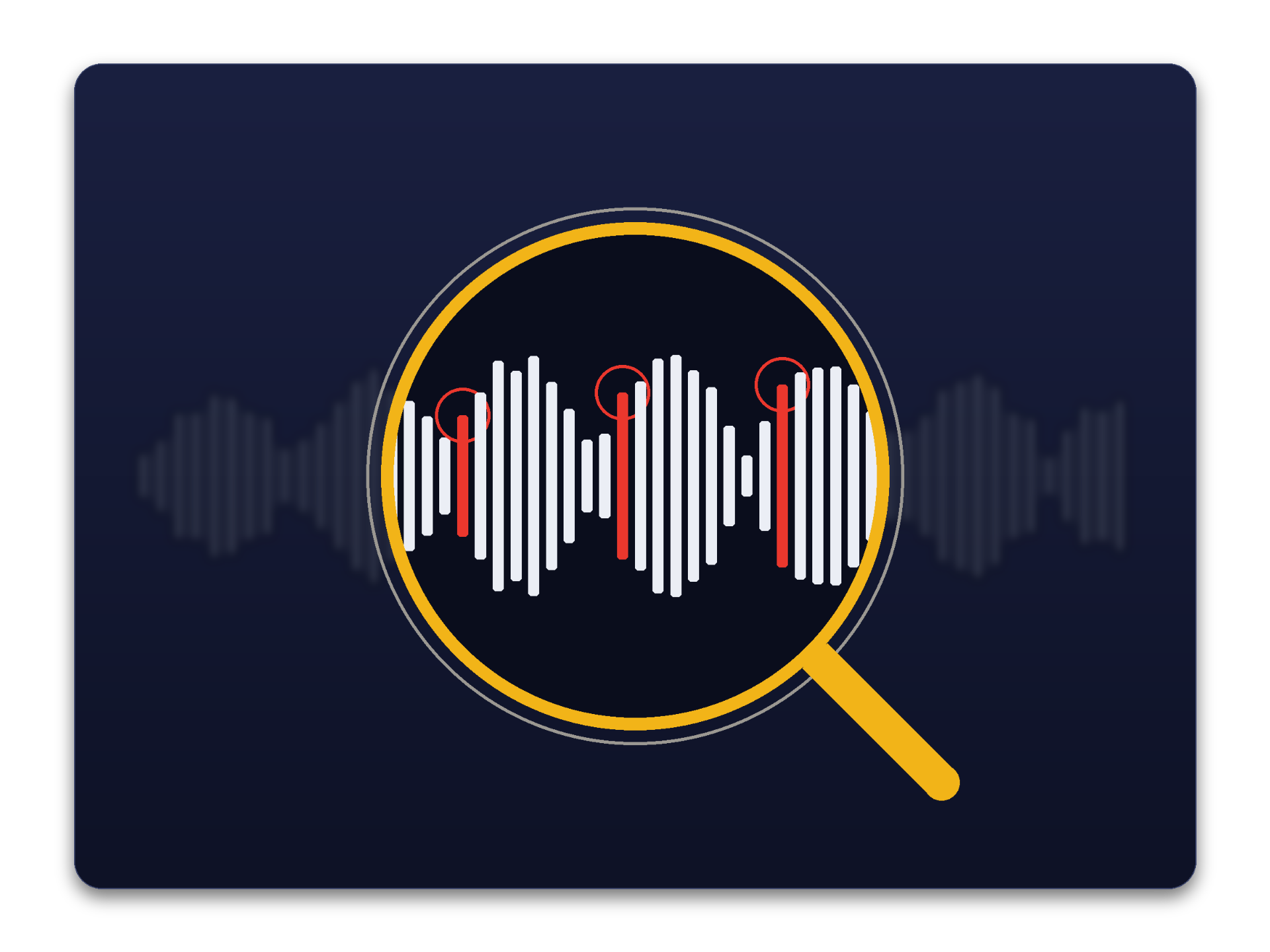
1Diagnose why it's not translating:
In 5 minutes you'll see the 2–3 things actually wrong with your mix, using the same objective checks the pros use.
No more "someone said it's muddy and I don't know what that means."
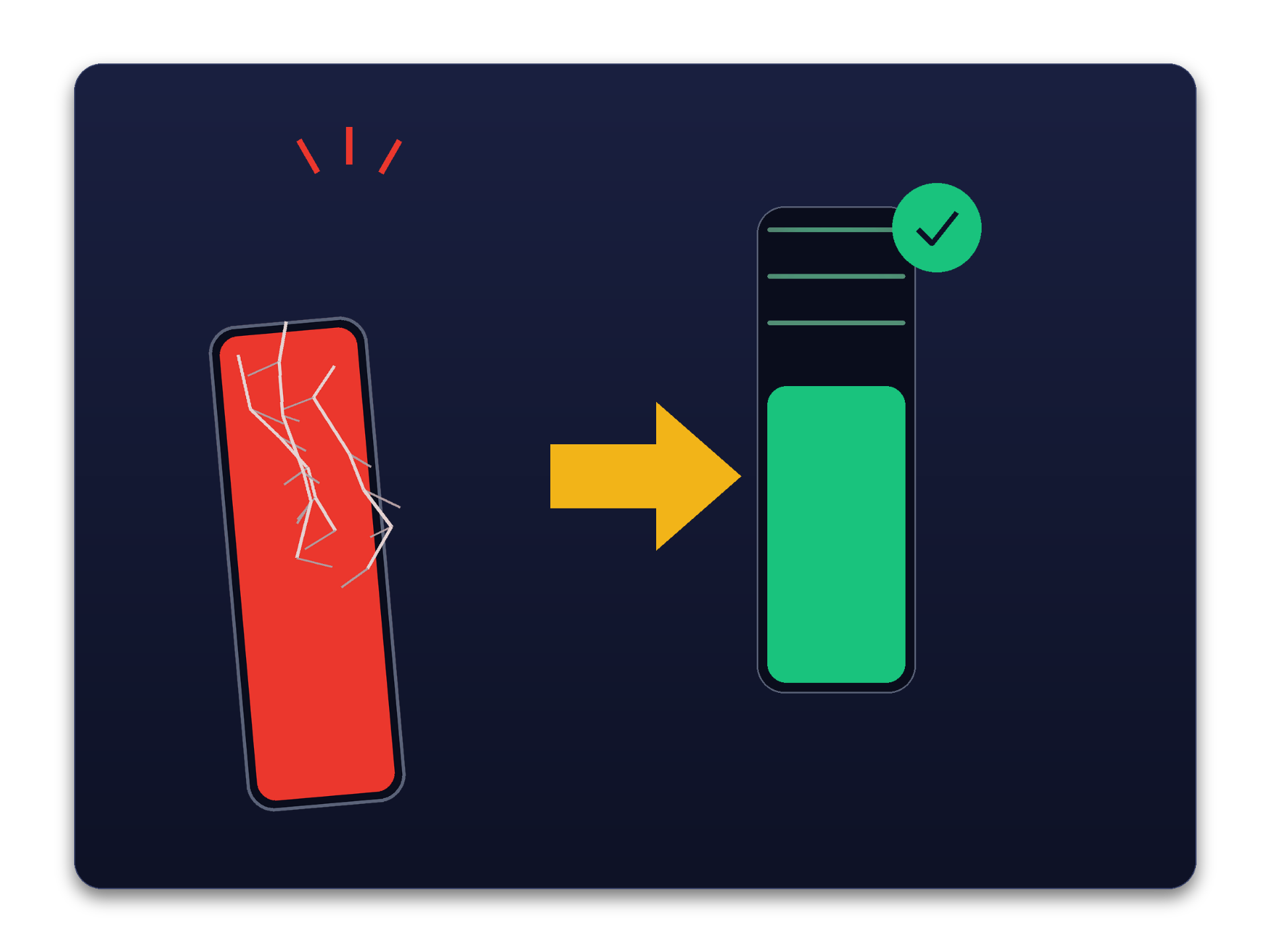
2Set The Foundation:
the 60-second setup move that gives your mix room to breathe, so it stops falling apart later and you're not sure how to fix it.
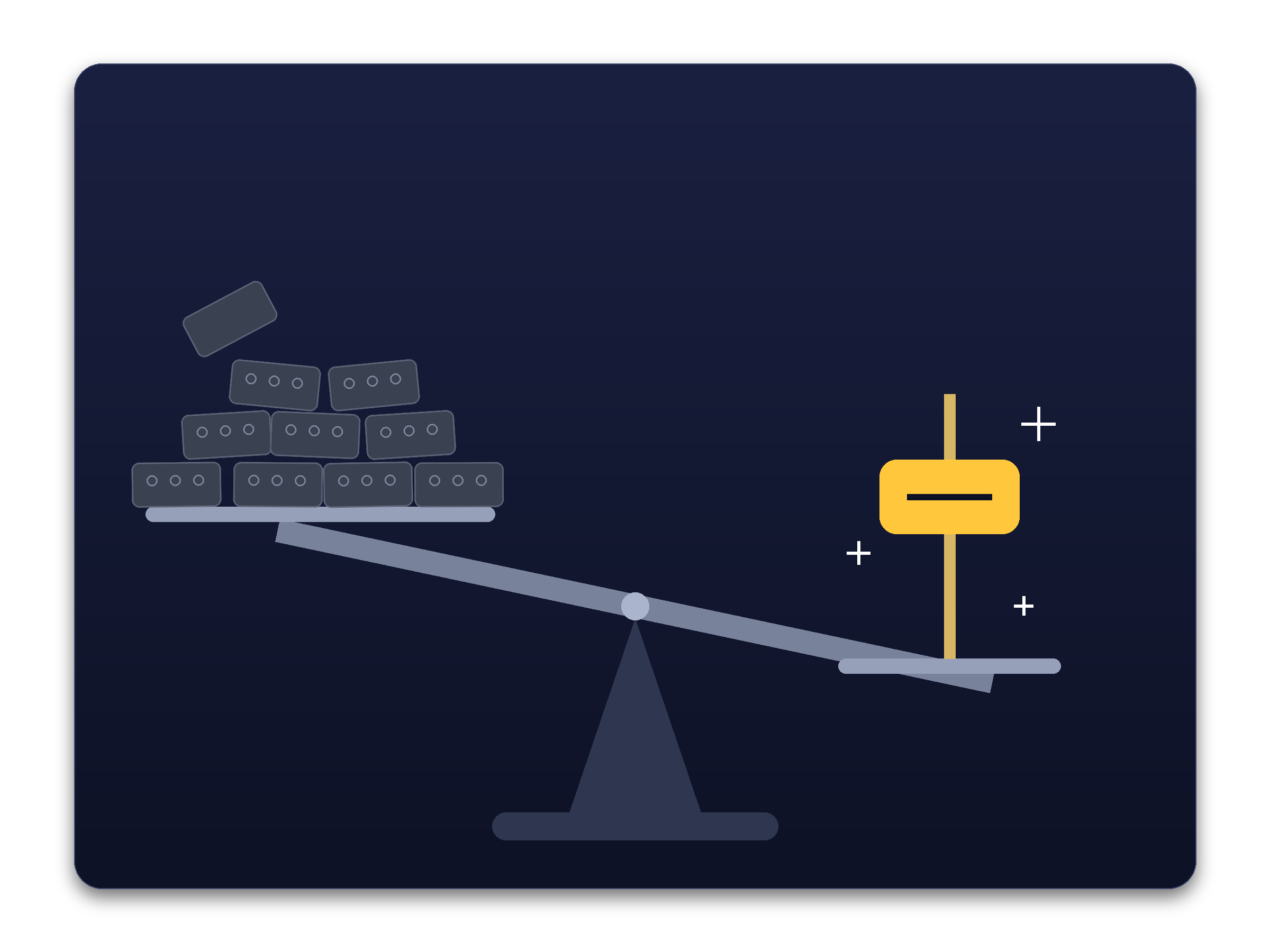
3The 90% Move: Volume Balance
My "Baseball Field" method places every element exactly as close or far as it should be.
Your mix sounds 90% pro before you touch a single plugin.
(Yes, really. This is the step people email me about.)
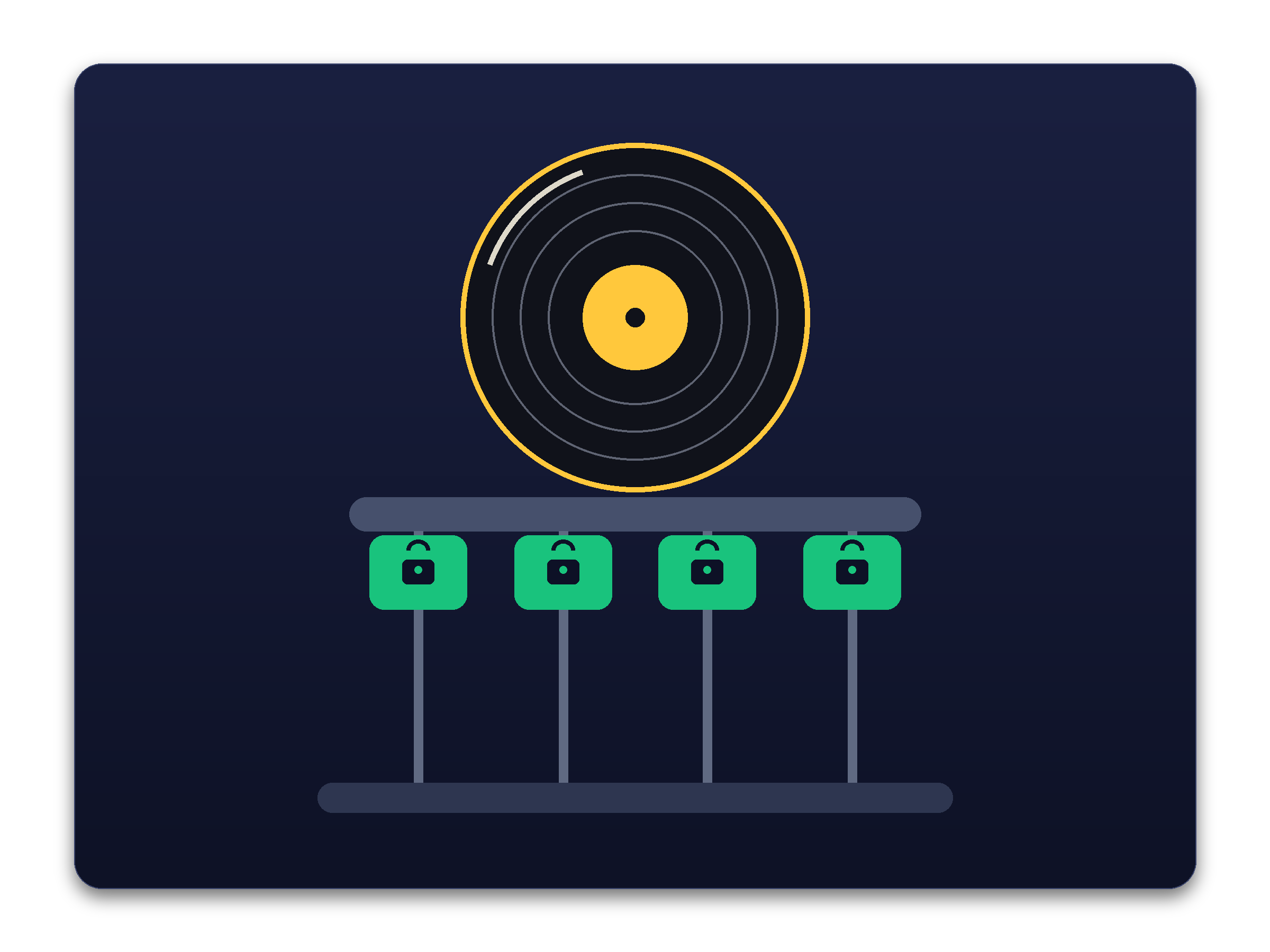
4Lock the Make-or-Break Elements:
Vocal, snare, kick, bass. The four sounds that decide whether your track reads "record" or "bedroom demo."
You'll get them to sit — every time, on purpose.
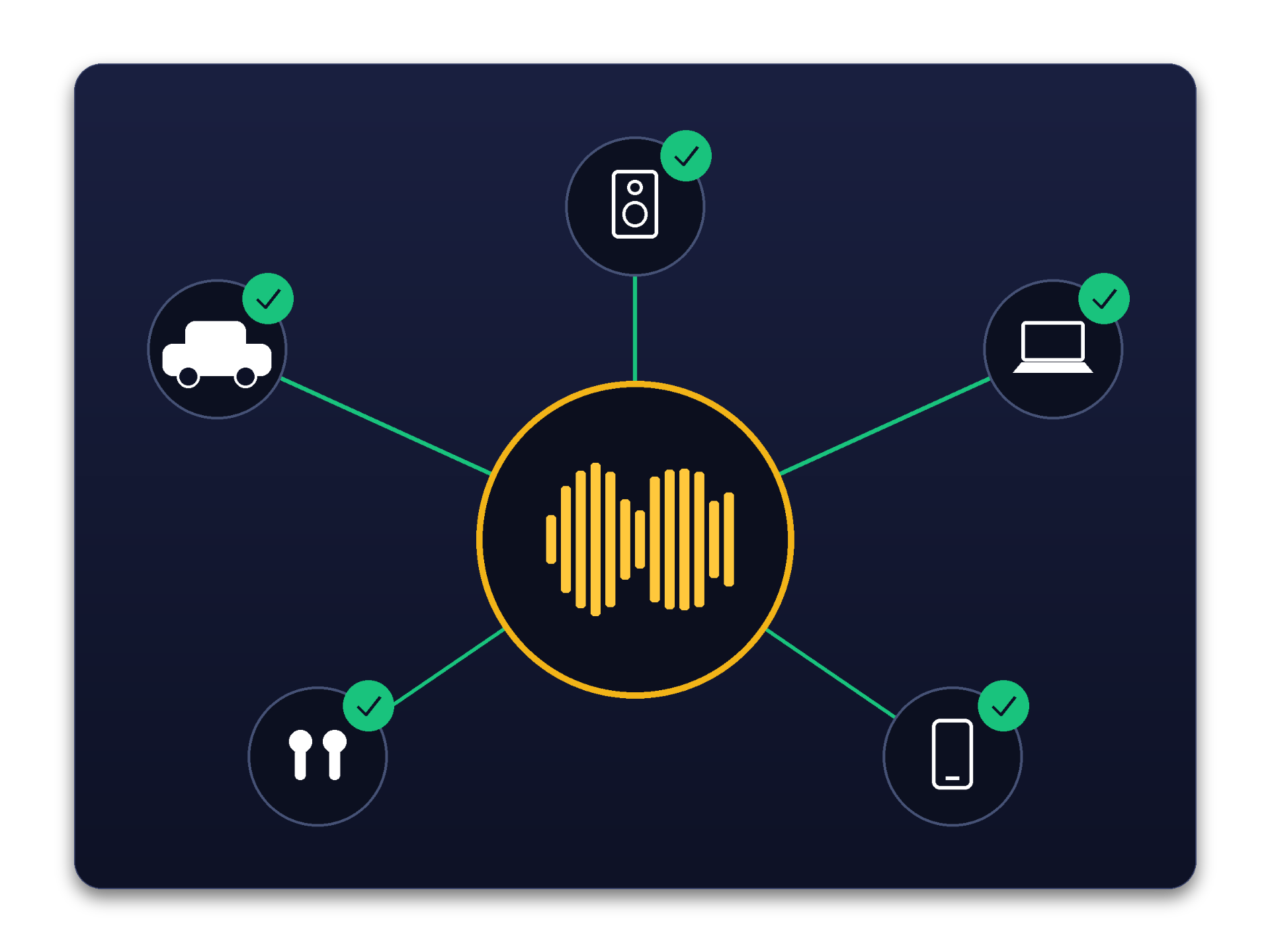
5The Translation Pass:
Match your balance against an objective, "pro" target so it holds up on any speaker, any earbuds, any phone.
(No, this isn't "use reference songs".)
This is where it stops sounding like a different song in every environment.

6The car test: passed.
The final checklist that confirms it translates before you leave the house.
Your walk to the car becomes your victory lap.
One trip.
Or maybe two if you want to gloat.
You also get the plug-and-play tools to run the whole flow start to finish:
- objective translation guides (for YOUR mix)
- objective noise file
(don't worry — I tell you exactly what to do with it; no audio degree required).
Instant digital access • Backed by a 365-day, no-questions refund
More of a creative than a tech person?
Perfect. You're actually my favorite student.
There's no jargon in here, no math, and at no point will I ask you to "notch out the box at 400" like you're supposed to know what that means. (Who came up with "boxy" as a way to describe sound anyhow?)
Every step is plain English.
If you can follow a recipe, you can make your mix translate.
It's not about what gear you own. It's about making the right moves in the right order, and finally knowing why, so you can do it again on the next song without reviewing anything.
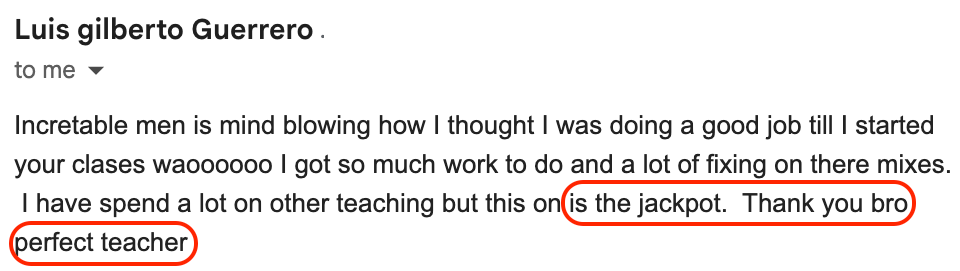
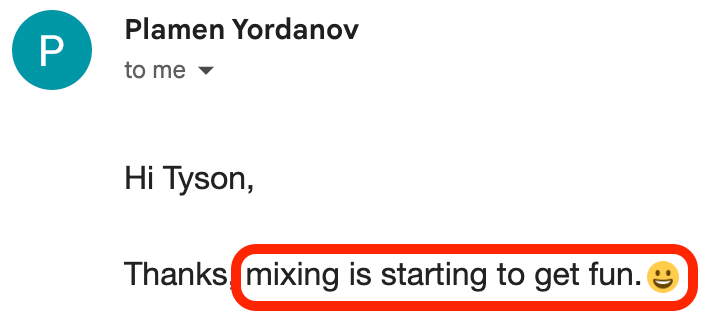
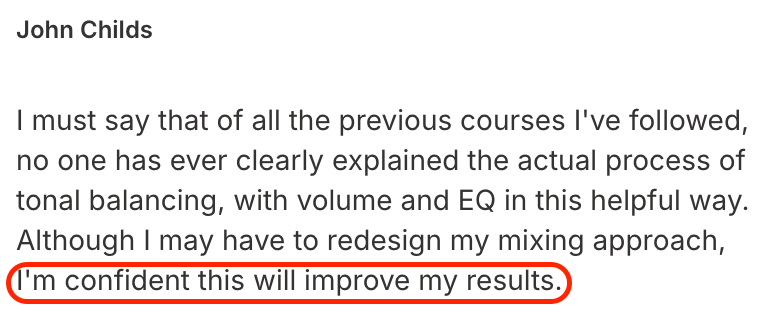
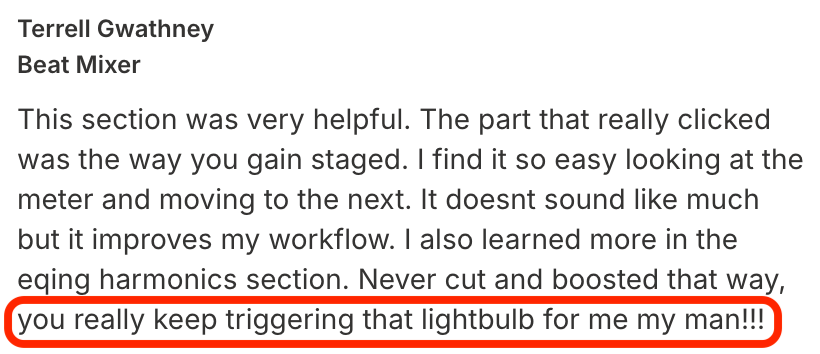
Don't Just Take My Word For It:
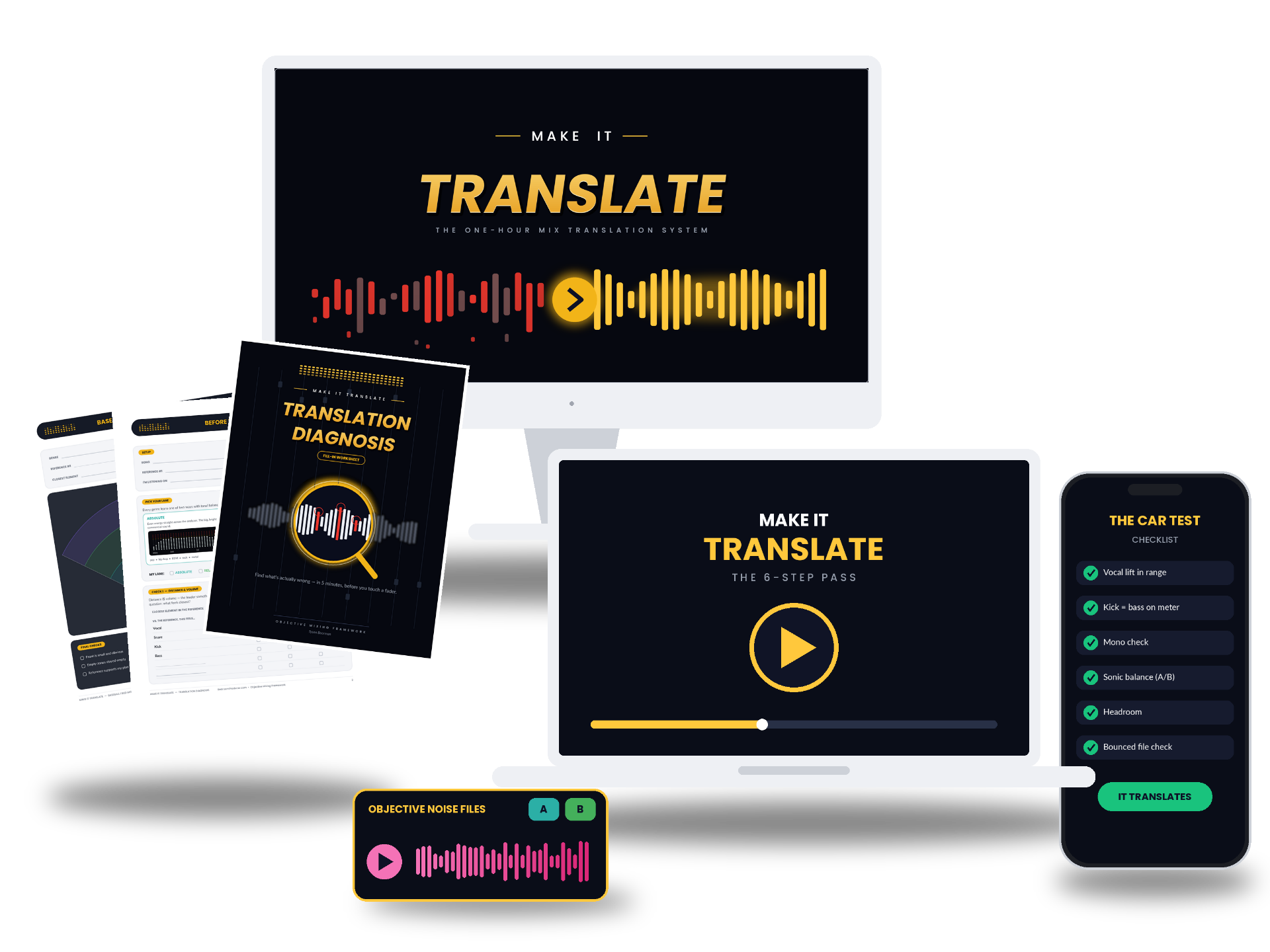
Here's everything you get in Make It Translate today:
- The full 6-step Translation Pass (short, do-this-now training — run them on your own song in one sitting)
- The fill-in worksheets (Translation Diagnosis + Baseball Field plan)
- The pink-noise file (your objective measuring stick — with exactly-what-to-do instructions)
- The "car test" final checklist (so you know before you walk out the door)
Normally this sells for $47. Today, to get it into your hands, it's just $27.
$27. That's one mystery plugin from a Black Friday sale you'll forget you own by January — except this one actually fixes the problem the other forty were supposed to.
Get Make It Translate - $27My 365-Day, No-Questions Guarantee
Try it for a full year.
Run the Translation Pass on your own song. If your mix doesn’t translate better than anything you’ve made before — or you just decide it wasn’t worth $27 — email me and I’ll refund every penny. No questions, no forms, no “exit interview,” no hard feelings.
You’ve gambled $27 on plugins with a 100% “sounds the same” success rate. This one’s actually insured.
Instant digital access • Backed by a 365-day, no-questions refund
I have to be straight with you, because I’d rather lose a sale than your trust:
This will not turn you into a world-class engineer overnight, and anyone who promises that is selling you a poster of a gym membership. Mixing is about 80% objective method and 20% reps over time. Make It Translate hands you the method — the fastest, highest-leverage piece — so you stop guessing and start hearing real results this week. The reps are on you.
What I can promise: the next mix you run through this pass will be the first one you’re not nervous to play in front of other people. For most of us, that’s the whole reason we started.
Questions You’re Probably Asking:
Will this work in my DAW?
Do I need expensive monitors or a treated room?
I’m a beginner. Is this too advanced?
I’ve been mixing for years and I’m still stuck. Will this actually help?
Can’t I learn this on YouTube?
How fast will I see results?
You’ve got two options tonight.
Option one: keep doing the ritual. Tweak, bounce, walk to the car, wince, walk back. Keep almost-sending tracks to the group chat. Keep wondering if you “just don’t have the ear” (you do — it was never the ear).
Option two: run the Translation Pass, and know it translates before you even open the car door.
One of these costs $27. The other one has already cost you years.
Get Make It Translate - $27Instant digital access • Backed by a 365-day, no-questions refund
Can’t wait to hear what your mixes sound like on the other side,
Tyson
P.S. — For the skimmers (I respect it, I do the same thing): your mixes don’t fall apart in the car because of your gear, your room, or your talent. They fall apart because you’ve been mixing blind — no objective way to know the balance was right. Make It Translate is the Translation Pass that fixes it: about an hour, your own song, any DAW, no new plugins. It’s $27, with a full-year, no-questions refund. Your cupholder deserves a break.
Get Make It Translate - $27Instant digital access • Backed by a 365-day, no-questions refund